A mother lode of brilliant books to gift this Mother's Day

Mother's Day is fast approaching! And to celebrate, here are some of our staff's top picks that we know our Mums will love. Whether she's a business woman, stay at home mum, an empty nester, a grandma or the motherly figure in your life--there's something for all Mums on this lovely list...


Between the Dances by Jacqueline Dinan
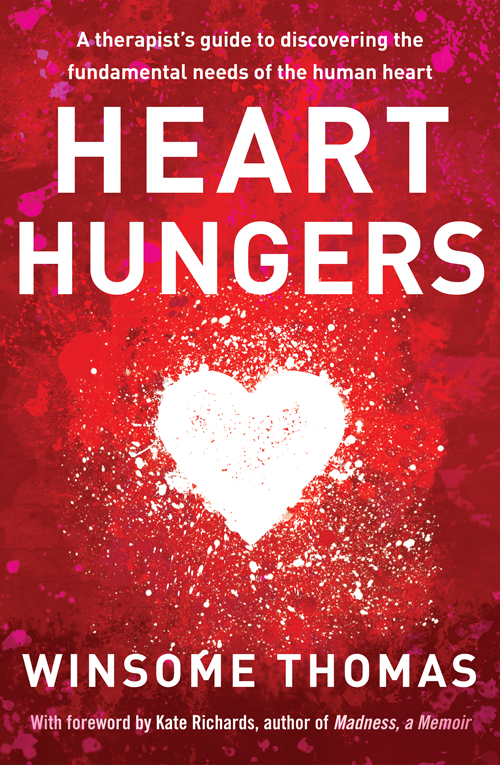
Heart Hungers by Winsome Thomas

Midlife Manifesto by Jane Mathews

The Little Book of Mum's Wisdom by Denis and Ian Baker
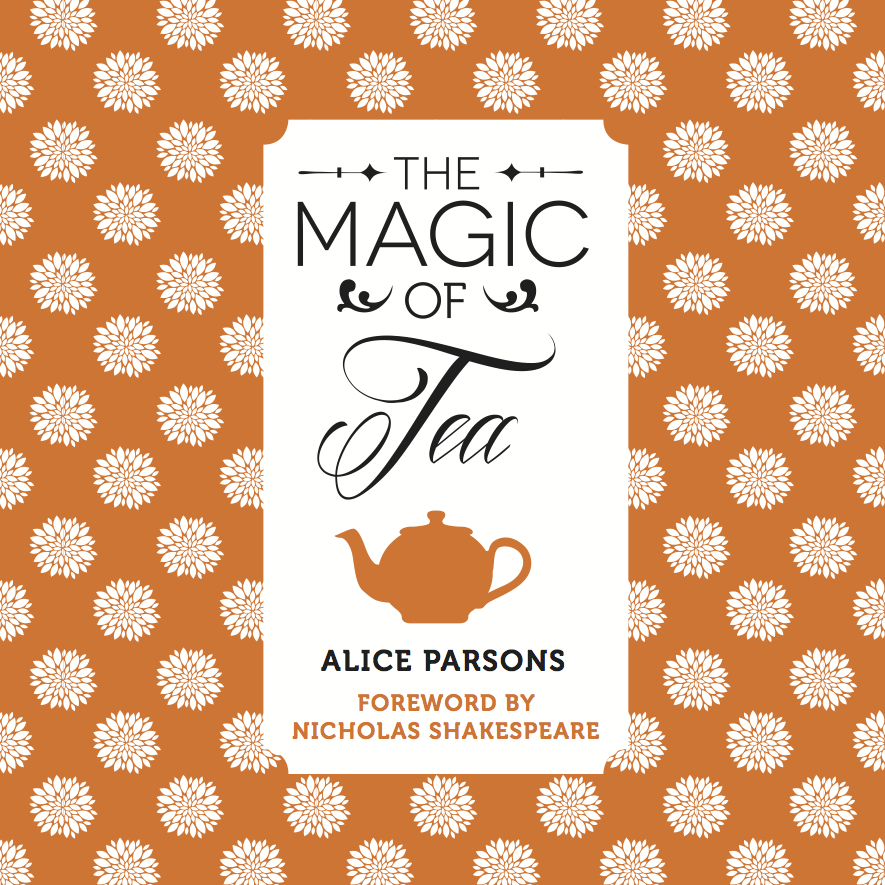
The Magic of Tea by Alice Parsons
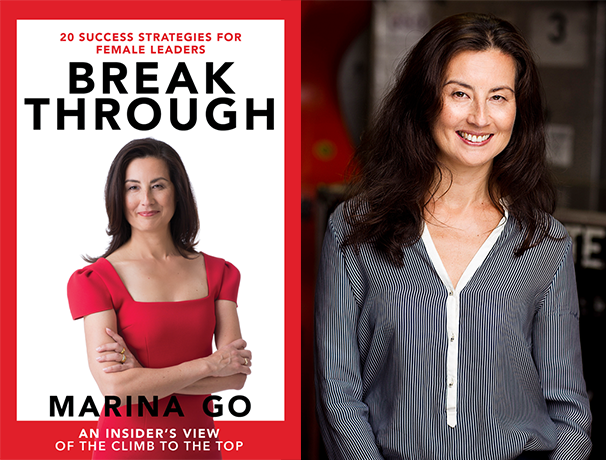
An Extract from Break Through by Marina Go
From editor of Dolly at the age of 23 to CEO of Australia’s leading digital publisher by her forties, Marina Go is here to inspire the next generation of female leaders to take their rightful place at the top. In Break Through, Marina Go, general manager of Harper’s Bazaar, ELLE and Cosmopolitan and the first female chair of Wests Tigers NRL Club, shares an in-depth analysis of the 20 leadership traits that make a successful woman – providing the tools to turn your personal vision of success into a reality.
Read an extract below.

From editor of Dolly at the age of 23 to CEO of Australia’s leading digital publisher by her forties, Marina Go is here to inspire the next generation of female leaders to take their rightful place at the top. In Break Through, Marina Go, general manager of Harper’s Bazaar, ELLE and Cosmopolitan and the first female chair of Wests Tigers NRL Club, shares an in-depth analysis of the 20 leadership traits that make a successful woman – providing the tools to turn your personal vision of success into a reality.
Read an extract below.
MAKE YOUR OWN LUCK
Leadership lesson: How to make the most of being in the right place at the right time
I have always believed we make our own luck.
Being in the right place at the right time is lucky, as is being born into a well-connected family or having access to family money when you want to start a business. However, it’s how well prepared you are when you get that lucky break that really counts. As a career strategist, I was never going to rely on charm to get me where I desperately wanted to go – which was right to the top.
From the time I was young my father told me I needed to set down solid foundations early in my career. He advised me there was no way around good old-fashioned hard work and study. He was the complete opposite of those people who pin their life’s hopes on winning the lottery. Dad loved the odd gamble at the races, but he never assumed he would win his way to wealth. He worked hard his entire working life and the financial decisions my parents made along the way are the reason they live a comfortable existence in their retirement.
I have built my career on the same principles. My career strategy has been to almost over-qualify for every role I aspire to.
This is also a very female thing to do, I know. But it does mean that when opportunity, or luck, strikes you are ready for it.
It also means that you may, in fact, create your own luck. If you are the standout candidate for a job, then, due to the career decisions that you made in the lead-up, you will undoubtedly be the person an astute organisation taps on the shoulder.
I felt extremely lucky when two years ago, out of the blue, I was offered the chance to run the Hearst business for Bauer Media. I couldn’t believe my luck.
But when I spoke to both the CEO of Bauer Media and the Head of International Licensing for Hearst about the role, it became evident that it was my career choices to date that had prepared me for that role. Hearst was in the middle of rolling out a global digital strategy and they wanted someone with extensive digital and magazine publishing experience who had a deep understanding of female consumers to lead their business in Australia. Apparently I was one of very few people who could tick all those boxes.
My career strategy has been to differentiate myself from the rest of my peers by making different career decisions and then adding postgraduate study to the mix. It’s one of the key reasons I have been able to break through into the executive ranks. But the strategy is equally important when you are starting out in your career.
I always tell the story of Dolly when describing my first lucky break. I had a simple, but focused dream as a teenager: to become editor of Dolly magazine. I worked out the steps it would take for me to get there. The steps were many, varied and definitely not assured. But I never gave up hope. I visualised myself in that role and always believed I would get it. Then I worked hard to reach my goal: a full-time day job and a full-time university study workload in the evenings. Nothing was going to stop me.
±
MEMOIR:
Lucky breaks – the who, what and where of landing the dream job of editor of Dolly magazine
The yellow batphone buzzed loudly and I almost fell off my chair. It was every editor’s nightmare – well, at least my editor was terrified of it. It was the direct line to management and if it buzzed, it was one of three people who could make your day – or ruin it: Publisher Richard Walsh, Editor-in-Chief Lisa Wilkinson or owner Kerry Packer.
The editor of Dolly was in the UK on leave and as her deputy I was keeping the seat warm and the magazine running smoothly until her return – planned for later that month.
I answered the phone and murmured nervously, “hello”. It was Richard, my favourite of the three potential callers.
“Can you come to my office? I need to discuss something with you,” he said, with a definite lilt in his voice.
Certain he wanted to discuss the latest issue or next cover, as copy sales had been sliding in recent months, I gathered up my entire desk, virtually, and hurried anxiously along to his office. Even though I was only the acting editor, I was keen not to make any mistakes. When I arrived, Richard’s door was open and he invited me in.
Not one to waste time, Richard got to the point immediately. “Caroline’s not coming back to Dolly and I’d like you to be the editor,” he said with a wide grin. I was speechless, but absolutely bursting with joy inside.
Before I could say anything at all, he added, “Now go and see Lisa so she can talk to you about this.”
I couldn’t believe it. As a 16-year-old living in the suburbs, I would look forward to the day a new edition of Dolly was published – in the way that I now looked forward to buying a new pair of shoes with virtually the same frequency.
Of course I believed I could do it, no question. I’d planned out the ultimate issue of Dolly in my mind many times. As I walked – or was I skipping? – along the corridor to Lisa’s office, I was visualising the new Dolly. I am embarrassed to admit at this point that I was so excited I didn’t even consider that perhaps Caroline might have been pushed. I was so optimistic and, to be honest, completely green and naive in the ways of the magazine publishing world that I assumed she must have decided not to come back from London, which was her home town after all. It was my turn to be in the right place at the right time. I thought it was some sort of sign.
I had missed out on the editor’s job 10 months earlier when the decision came down to two people: Caroline and me. The rumour was that Lisa had chosen me and Richard had chosen Caroline, but neither of them ever actually confirmed that.
My father, one of the most superstitious people on this planet and probably the reason I consulted so many psychics and tarot readers over the years, told me it wasn’t meant to be.
“Don’t worry,” he said knowingly, when I phoned to say I didn’t get the job. “Your time will come.”
For some reason I always believed him when he said that. Even though in my heart I knew he only said it because he believed in me.
Caroline’s approach to the magazine was exactly aligned with the brief she’d been given when hired to edit the magazine: she packed the magazine with all the things she believed teenage girls should be passionate about – the environment, having a career, eating well and not wasting your time on petty things like hair removal or make-up. They were all really great things for young women to be concerned about. The problem was that teenage girls just weren’t interested in that alone and readers had given up on the magazine to the tune of 100,000 copy sales per month. It hadn’t helped that another teenage girl’s magazine, Girlfriend, which had a greater focus on sex and celebrities, had launched around the same time that Caroline became editor.
Thankfully Lisa and I shared a vision for Dolly – of course we did, she was my inspiration for choosing my career.
When I arrived at her office, I knew she was going to ask me to change the magazine. We spent about 30 minutes discussing our ideas and as I left her office, I felt an overwhelming sense of success. Even though I had achieved nothing more than the job title at that point, and I knew it would be tough to lift the sales of the magazine back to the level of its glory days, I had experienced my lottery moment.
I phoned my parents to tell them the good news.
“Good on you, Min,” my dad said, always happy to hear the word promotion.
Dad always called me by my nickname. I only ever recall Dad using my name if he was speaking about me, never to me.
Graeme had decamped to London already and we’d decided to take a break. I was 23 years old with no attachments, flatting in the inner-western suburb of Stanmore with a friend from uni, Helen. That first evening at home after my elevation to Dolly editor was one of celebration – and the first time Helen had seen me smile since waving Graeme off at the airport a couple of months earlier. We cracked open a bottle of cheap wine and got as close to drunk as two women can get sharing a single bottle mixed with girly hysteria – we couldn’t afford Champagne, but clearly we didn’t need it.
For the first six months, seven days a week, I went into the Dolly office, on the fourth floor of the Australian Consolidated Press building on Park Street, and stayed until around 11pm most nights. And I loved it. I actually hated leaving to go home. Dolly was all consuming.
My parents were concerned that I was focusing too much on my career. They didn’t see as much of me as they would have liked. I was still single and it troubled them greatly.
“Look after yourself, Min,” Dad warned. “Make sure you’re taking lots of calcium and vitamin B. It’s not good for girls to get too stressed.”
“Have you met any nice men lately?” Mum would ask almost every time we talked.
“No, Mum,” I’d say, feigning boredom. “Don’t leave it too late,” she would reply. “No-one will want you if you are too old.”
“I’m only twenty-three!” I’d scream down the phone.
It felt as though I was living a double life. I had the daily glamour of a magazine editor’s life, complete with free facials, concert tickets and A-list parties. At night I would go home to my borrowed furniture in the third bedroom of the terrace that Helen’s parents owned. And every other night I would have to convince my parents that I wasn’t becoming too career-obsessed for my own good.
Dolly had only recently been purchased as part of an Australian Consolidated Press buy-up of Fairfax’s magazine group and was located in a corridor between The Bulletin and Australian Business Monthly. I can only imagine how much the journalists on those magazines might have hated the endless giggles that resonated from the Dolly office at any hour of the day. Or the sight of my chief sub-editor lying flat on her back in the middle of the office (which was also the corridor between Australian Business Monthly and the lift, and The Bulletin and the stairs) during one of her creative blocks that could last for up to three days at a time. I found out the hard way that the best way to deal with this crazy individual was to starve her of attention. If I begged her to do her job, she would prolong the agony. If I ignored the theatrics and even stepped over her on my way to the art department, she could be back at her desk tapping away at a story by lunchtime.
I could have, probably should have, fired her immediately but when she was on her game, and to be fair she was most of the time, her work was genius. But she was clearly unstable and responsible for my 20-year obsession with the concept of a workplace nutter. You see, I came to surmise that in every business there was someone who could potentially walk in one day with a machete or machine gun and blow everyone away. In future, I would identify that person in the first week of a new job and then spend each and every day ensuring I wasn’t on their bad side – or even their good side, because that could also end in tears (or worse) if the perceived friendship soured. Workplace relationships are fraught with danger!
A couple of weeks into the job, the batphone rang and it was Lisa, who was also editor of the hugely successful Cleo magazine, asking me to go around to her office, which was on the other side of the fourth floor – the nicer, brighter side, with large windows overlooking Park Street. Her assistant ushered me straight in and I got my first in the flesh sighting of Kerry Packer.
“I’d like you to meet Kerry Packer,” Lisa said. “Who the hell are you?” Packer thundered at me.
Unable to speak, I looked at Lisa and she was smiling. “Marina’s the new editor of Dolly,” she said, completely relaxed in the company of this enormous, frightening man.
“You’re too fucking young to be an editor,” he boomed, staring me down.
Lisa, sensing I wanted to run and hide, said, “It’s alright, you can go.”
As I ran from her office, I could hear his laughter. I was angry and terrified. Who the hell did he think he was making me feel so small and insignificant when I had been working my butt off 24/7 to make him money? Was that his motivation strategy or some weird test of my character?
As well as over-analysing the situation, which I would come to realise could be boiled down to one simple fact – the man was a bully – I spent the next couple of days convinced I would be fired at any time.
One of my first tasks as editor was to hire a deputy. We put an ad in the newspaper and I received about 100 applications, half of which were from schoolgirls who, like me some eight years earlier, just wanted to work at Dolly. I narrowed the field to six and interviewed them across a two-week period. I knew what I needed. My fixation with Dolly was always on the fashion, beauty and features side as a teenager. Unless I was crazy about a particular celebrity or band, I would always skip those articles. As a reader I never read the music reviews, for example. So I needed someone who was celebrity-obsessed, someone who knew who the next big thing would be.
Even though I had never previously managed a team of people, or made hiring decisions, I didn’t even consider that I mightn’t know how to do it. I’m not sure why I felt so supremely confident to just get on in there and do it. I hadn’t experienced the repercussions of a dumb decision yet – perhaps that had something to do with it. Whatever the reason, I was excited about taking action and making key decisions.
I found the perfect deputy in a journalist working for TV Week. From the moment Suellen Topfer walked into my office I know she would be the one. She called me Marini, asked me my star sign (we were both Scorpio with birthdays a day apart – she was exactly one day older than me). Then went on to babble endlessly about boy bands, girl bands, Hollywood heart-throbs, who was gay and still in the closet, who was gay but just didn’t know it yet, who was secretly dating who and, most importantly, who she predicted would be the next big things in Hollywood, on our TV screens and in the Top 40 music charts. I warmed to her immediately.
Suellen, who would become known to the office as “Susy T”, joined the team a month later and made her mark from day one. She was originally from Toowoomba in Queensland and was one of the most open people I had ever encountered. Right away the entire office knew everything there was to know about her sex life – and she expected the same in return. Suellen hassled the writers and fashion team, in particular, about their relationships, relentlessly. She wanted details and dirt and wouldn’t stop until she got something she could work with.
By stark contrast I was an extremely private person, so it frustrated Suellen that she could never get any real details on my personal life. She was keen to know more about Graeme, the boyfriend who I was obviously not yet over, despite his suggestion in a phone call from London that we take some time out. I tried to give her information but I just wasn’t very good at sitting around dissecting the detail of our relationship. While Suellen was telling me I needed to get a real boyfriend (did I mention she could be harsh?), Helen was constantly trying to set me up with friends of her boyfriend. It was never going to work. In the background I was fielding phone calls from my parents who were keen for me to settle down and find a husband.
I was still hooked on Graeme and slightly annoyed that my family and friends wouldn’t allow me to deal with my personal pain in my own way and in my own time.
Suellen and I were complete opposites, which is why we were a great team most of the time, but we shared an obsession with the future. So keen were we to know what our futures would hold, that we often made back-to-back bookings to see psychics. Suellen would introduce me to hers, and I would return the favour. There was a time in Dolly’s life when the magazine was virtually run on the advice of psychics. Interestingly, that was a very good year for sales.
Following each sitting, I would phone my parents to tell them what the psychic told me.
“Dad, she said that your father is my spirit guide and that I should surround myself with gold-coloured fish,” I informed my father.
“Oh,” he said quietly. “Did she say anything else about him?” “Only that he had a message for you to watch your health.
Apparently you have some back troubles,” I said.
“That might be what’s wrong with me. I have some pain there,” he said.
My father’s foster mother taught him to read palms when he was a very young child. He’s been doing it all his life. That, and feng shui. When I was hunting for my first apartment, Dad came with me. He needed to be certain that the location and direction of my apartment was auspicious. We saw many apartments that I really liked (i.e. they were beautifully renovated) that Dad put a black mark against.
“You can’t buy the number four apartment in a building because four means death,” Dad said as I reluctantly walked away from a potential dream apartment. Instead he directed me to another apartment, number eight in its building.
“This is the one,” he beamed. “Number eight is good luck.” “Are you sure, Dad?” I asked, looking into an apartment that was desperately craving a decent paint job, new kitchen and updated bathroom.
“Yes the feng shui is good. You will be lucky here.”
If you weren’t brought up within a Chinese family, where superstitions reign supreme, then you wouldn’t understand why I went along with my dad’s advice and bought the apartment.
Suellen dropped by one day when my parents were visiting and asked my dad to read her palm.
“This is a very bad hand,” Dad said to me, as though Suellen wasn’t even in the room. “She needs to learn how to keep her mouth shut. She will never be able to keep a man.”
I sat there cringing.
“Mr Go, will I meet the man I’m going to marry soon?” she asked hopefully, seeming to ignore his rather abrupt reading.
“Ah…not really,” he said, with a little more subtlety. “You scare men off because of your mouth…but you have a good heart,” he said, before abandoning the reading and changing the subject.
Dolly was land of the have nots and magazines like Cleo was where the haves worked. As the highest-earning member of the Dolly team I was on 40,000 dollars a year in the early nineties, which my fashion editor, a former Cleo fashion assistant, told me was the salary that the staff writer was on at Cleo. But I didn’t care about the money – I was having the time of my life, working on the best magazine in the world with the best people I’d ever worked with. The trouble was that within a company the size of ACP people talk, and my team were starting to learn that in the earning stakes they were the poor cousins.
As their manager it was tough to keep them motivated beyond their first honeymoon year, when the reality of rent, clothing and life – and there was a lot of pressure to always wear the latest fashions, have the right haircut and be up to date with the hottest new bands – generally hit them hard. It is tough to live on fun alone and so I often lost good people to the better-paying magazines, often within my own company – even though I prayed to St Anthony that the better ones would stay.
There was one particularly difficult occasion. Some of my team had been on the same salary for more than two years and it was annual review time. I was feeling extremely hopeful – for myself and for my team – as Dolly’s profit was up and I’d read just that morning that Kerry Packer had won 20 million dollars at Las Vegas. Instead I was mortified to have to explain away the contents of a memo that was delivered to my in-tray later that afternoon. I called the team into my office to announce that as ACP had been doing it tough for the past 12 months, there was a freeze on salary increases. Their faces mirrored my own pain at having to toe the company line, when really I just wanted to say something like, “that tight-arse Packer is screwing us on pay again, we should all resign en masse and see how he can run Dolly without us.”
I could tell that a few of them wanted to swear and/or resign in protest, but they loved their jobs and would ride it out, hoping to be recognised the following year.
My own salary was part of that freeze. I’d worked my guts out to produce positive results and was trying to live the proverbial Champagne lifestyle of an editor – there are expectations after a while that go with the territory, such as grooming and brand names – on a no-name-beer budget. But I wasn’t about to resign or protest either because I truly did love that job.
Luckily there were free bands to see and lots of freebies to be had. None of us had to buy our own cosmetics – except for Production Editor Robbie Johnston – because they arrived in our office from public relations companies by the truckload. Beauty Editor Aileen Marr photographed them for the magazine and then we would have a beauty charity sale – which involved staff buying the products for a dollar each. I felt proud that we then donated the proceeds to a charity. Everybody won.
One afternoon, Suellen received a phone call from one of her favourite music publicists who whispered to her, in hushed tones, that we really needed to see singer Mary-Jo Starr, aka actress Kaarin Fairfax, at a certain Kings Cross nightclub that evening. Suellen and I decided we were in because one thing we both thrived on was the feeling of being able to access situations that anyone outside of our industry could only dream about. That usually made up for any feelings of being financially ripped off by our owner. It was give and take.
When we arrived at the club I noticed a Daily Telegraph photographer, Marco Del Grande, who I’d worked with a couple of years earlier on the Daily Mirror. He had obviously been tipped off too. I felt that something big was about to happen.
About 30 minutes passed and then Suellen yelled, “Look, it’s Michael Hutchence!” An Australian rock god, and the man every girl in Australia would have fallen over backwards to meet, Hutchence had slipped in the side door and the photographers immediately went across and started snapping. But I was too fixated to care – with him was American heart-throb actor Rob Lowe, who I’d had a crush on as a teenager. His crown had already started to slip by then and he was known to be as sleazy as he was cheesy. But that didn’t stop me from grabbing Marco and asking him to take a photo of me with Lowe. Lowe was so off his face – as was Hutchence – that he would have posed for a photo with Jack the Ripper.
It was one of the highlights of my life to date. Never in my wildest dreams as a teenager did I imagine I would one day meet a Hollywood star. Hutchence may have been a bigger celebrity in Australia at the time, but I had met him while working at the Daily Mirror a few years earlier, so getting up close and personal with him wasn’t as big a deal for me. And he was Australian, after all. But Lowe was someone I had dreamed about after watching the brat-pack films of my teen years, St Elmo’s Fire and The Outsiders.
Mixing with the famous was something I got to do on quite a regular basis and shallow as it sounds, I enjoyed it. It made me feel more than a little bit lucky.
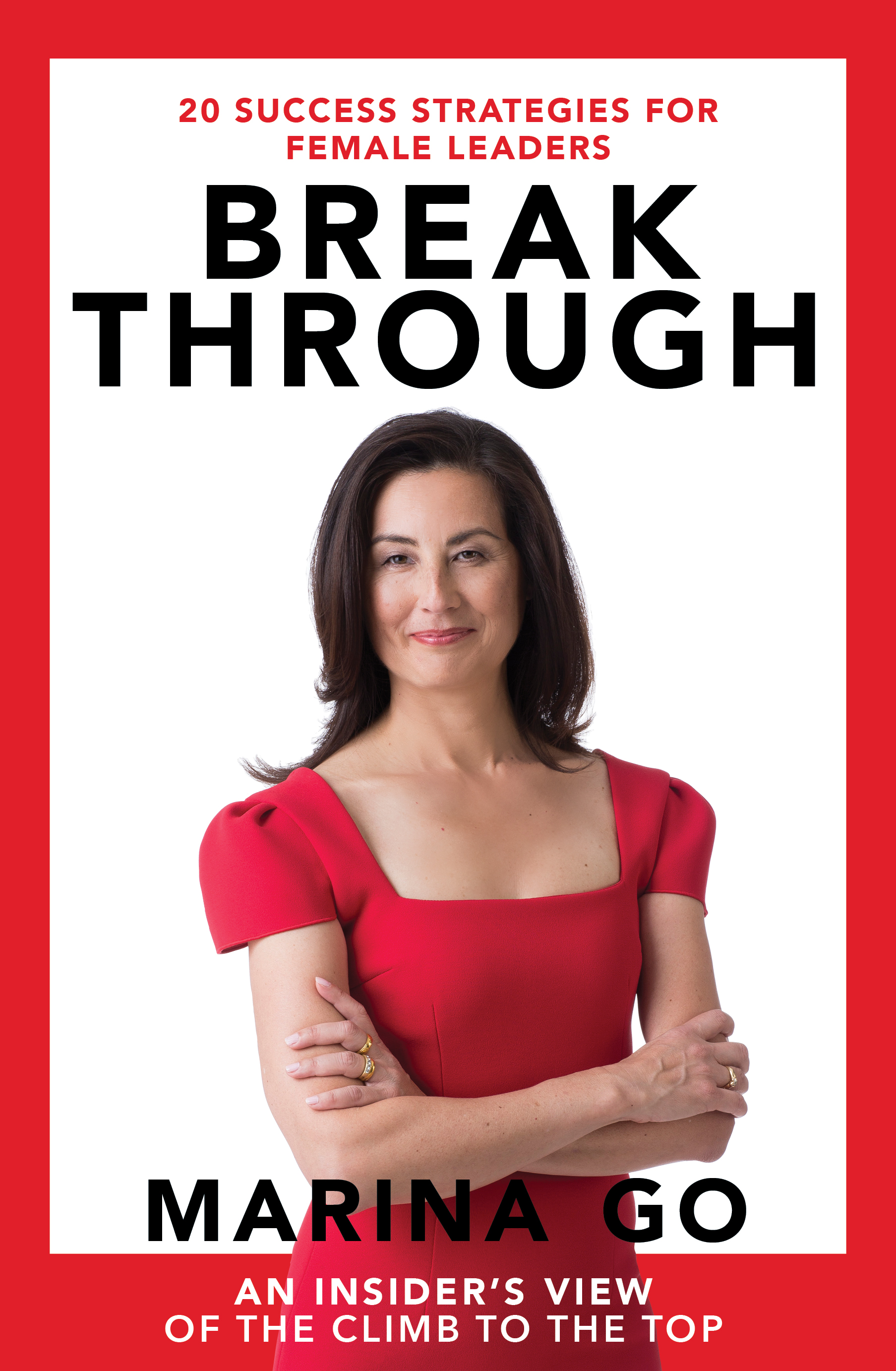
Break Through by Marina Go
$32.99

An extract from Heart Hungers by Winsome Thomas
Deeply poignant, honest and inspiring, Winsome Thomas draws from stories of the people she has treated, most notably the author of Madness: A Memoir, Kate Richards, to help readers uncover the eight fundamental desires that must be met to lead a fulfilling and satisfied life. Read an extract below.

Deeply poignant, honest and inspiring, Winsome Thomas draws from stories of the people she has treated, most notably the author of Madness: A Memoir, Kate Richards. Heart Hungers will help you uncover the eight fundamental desires that must be met to lead a fulfilling and satisfied life. Read an extract below.
1. Introduction
HAPPINESS IS AN ELUSIVE CONCEPT. I prefer the word ‘contentment’ as it conveys a notion of equanimity, peacefulness and acceptance combined with a quiet sense of joy.
I’m a psychologist. No client has come to me saying, ‘Please make me happy.’ Each, however, has come with a degree of distress of one sort or another whether manifesting as depression, anxiety, relationship issues or psychosis. Removal or alleviation of that distress is their desire. Ideally, each would progress to a level of contentment. Not all reach that state but major steps are taken when the deep longings of the heart are attended to. These fundamental desires are what I call the heart hungers.
The following chapters explore in more depth what I mean by ‘heart hungers’, how I’ve experienced them in my own life and describe the deep yearning some clients have brought to therapy. The mix of needs and desires is frequently complex and always unique. Through these stories you will gain insight into what the client seeks and what the therapist brings to the task to enable healing or restoration to occur.
The book’s genesis lies with my former client, Kate Richards.
Kate and I worked together over several years. Her therapy was punctuated from time to time by admission to hospital either after a suicide attempt or an act of severe self-harm. During her absences I would think that she had given up, because therapy can be confronting and challenging. Not everyone can stay the distance. Despite my misgivings Kate always returned, often with a massive new scar.
Over time Kate recovered and stabilised and her life took on a much greater semblance of normality. Throughout her therapy she wrote in the evenings and held down a regular job in medical research during the day. After leaving therapy, Kate wrote Madness: a Memoir, a recollection of her journey from the highs and lows of bipolar disorder to stable health.
She won awards for her book and has been interviewed in a range of public forums. In 2014 she appeared on the ABC television program Compass with other experts in the area of mental health. When the host Geraldine Doogue asked about her therapy, Kate replied that critical to her recovery was my holistic (body, mind and spirit) approach.
This work explains how that therapy, as a result of my training, core beliefs, values and life experience, came into being.
2. What are heart hungers?
As you ought not to attempt to cure the eyes without the head, or the head without the body, so neither ought you attempt to cure the body without the soul. - PLATO
EARLY IN MY CAREER as a psychologist couples came to me for counselling. In my search for information that would broaden and deepen my understanding of their problems I came across a small volume entitled The Intimate Marriage by Howard and Charlotte Clinebell. The Clinebells wrote in the seventies, an era when marriage, rather than partnership, was the prevailing form of committed relationship. They also wrote from a firmly Christian faith-based perspective.
In the book they listed eight basic heart hungers that, in their view, need to be met to a reasonable degree for a marriage to be satisfying. They are as follows:
1. security (from feelings of being accepted and belonging)
2. service (giving love to others, investing one’s life, meeting others’ needs)
3. esteem (feeling valued, recognised, affirmed by the other)
4. enjoyment (sexual, intellectual, recreational, aesthetic, spiritual)
5. love (knowing the other cares – deeply, warmly and dependably)
6. limits (the need for responsibility, dependable routines, respect for reality and rights of others)
7. freedom (the need for autonomy, space, respect for differences)
8. faith (the need for a philosophy of life, values and trust in God)
These propositions made me pause and reflect. Is it really the case that for a marriage or any de facto relationship to thrive, these yearnings need to be satisfied? Could it also be the case that these deep desires need to be met for individuals to feel contented and fulfilled, at least to a significant degree?
I came to the conclusion that these ‘heart hungers’ exist as the deepest needs not just for couples but for all. Absence or disturbance of one or more, especially over a long period of time, is likely to cause considerable distress. In due course I incorporated them into my repertoire of theory and have given them significant attention when dealing with clients. They have become a reference framework in my practice.
Encountering the work of Clinebell and Clinebell was not the first time I had considered which factors contribute to wellbeing. A number of people and theories had previously influenced me. Some I discovered in my undergraduate training and others later. The most significant were Maslow, Yalom and Seligman, each of whom holds an important place in the history of psychology. Their work, together with the Clinebells’ propositions, underpins and informs and frames all the heart hungers and my practice.
In 1943 Maslow in his seminal paper, ‘A Theory of Human Motivation’, proposed that humans are driven by a hierarchy of needs. Those needs, he argued, ascend from the most basic to the most sophisticated; namely,
- physiological needs: breathing, food, clothing, sleep
- safety and security: health, employment, property, family and social stability
- love and belonging: friendship, family, intimacy, sense of connection
- self-esteem: confidence, achievement, respect of others, the need to be a unique individual
- self-actualisation: morality, creativity, spontaneity, acceptance, experience of purpose, meaning and inner potential
There is an overlap between Maslow’s list of needs and the Clinebell heart hungers. And there are many other ways of classifying or analysing the factors that motivate and satisfy.
Irvin Yalom, the celebrated American psychiatrist, two decades after Maslow, provided an arresting alternative framework: an existential approach. He proposed that clients fundamentally grapple with the givens of existence. In his view the four ultimate concerns that we all face and deal with or avoid are:
1. death (its inevitability and the desire to continue to be)
2. freedom (the absence of external structure)
3. existential isolation (‘the tension between our awareness of our absolute isolation and our wish for contact, for protection, our wish to be part of a larger whole’)
4. meaninglessness (and the attempt to find meaning in this life)
Connection, acceptance, freedom and meaning present as common and essential elements in both the Clinebell list of heart hungers and in Yalom’s existential approach.
More recently Martin Seligman stated that happiness can be found through cultivating three dimensions in one’s life; namely,
1. the Pleasant Life, wherein we savour basic pleasures such as companionship, the natural environment and our bodily needs
2. the Good Life, wherein we discover and cultivate our unique virtues and strengths and use them to creatively enhance our lives. The six core virtues are: wisdom and knowledge; courage; love and humanity; justice; temperance and spirituality; and transcendence.
3. the Meaningful Life wherein we find deep fulfilment by creatively employing our unique strengths for a purpose greater than ourselves rather than focusing only on our own pursuit of pleasure
Each approach acknowledges a deep hunger in the human heart for a measure of contentment, a sense of equanimity and a sense of self. Until that hunger for peace of heart and mind is addressed we experience restlessness, anxiety and distress. The mind whirrs. The worry continues. The lethargy remains. The anxiety mounts. The emptiness or ache in the pit of the stomach continues.
Some endure the pain. For others, the level of distress is overwhelming and thoroughly disrupts and disturbs their ability to operate. The key question in each case is: what will bring a sense of wellbeing or equanimity or contentment and restore a sense of normality?
There are no magic wands. Over many years varying therapies have been developed for dealing with the dilemmas and distress that beset clients. The list is long. Some of the most common are as follows: narrative therapy, psychodynamic therapy, Gestalt therapy, mindfulness-based therapy, motivational therapy, psychodrama, reality therapy and relationship counselling. In recent years cognitive behaviour therapy (CBT) and dialectical behaviour therapy (DBT) have been used for a range of issues such as anxiety, depression, personality disorders and some aspects of psychoses. CBT places particular emphasis on addressing the role and contribution of cognition (our thoughts and beliefs) towards our functioning and DBT also incorporates attention to behaviours or actions. The basic premise underlying these approaches is that our emotions result from cognitions and behaviours and can be regulated when both are addressed.
From a therapeutic perspective each of the foregoing therapies principally attends to what one might be thinking, doing or feeling. Each is valid and valuable. In some cases it is essential that they be used in conjunction with appropriate medication. I hold deep respect for the contribution that can be made to stabilising mental and emotional disorders through medication. Without medication, those who suffer from psychotic illness and severe clinical depression would not be in a position to explore the self or to address lifestyle issues. However, medication does not provide the total answer to emotional and mental distress. It is only one part of the picture even if it is a major aspect. Optimal functioning is restored when the mind (thoughts), the body (behaviours) and the heart or spirit are addressed.
When you add or subtract pieces of glass in the bottom of a kaleidoscope you get a different picture and each time you turn the end section a different pattern appears. Similarly, in therapy we need to address every aspect of a life, not just one or some.
It was writers and researchers such as Clinebell and Clinebell, Maslow, Yalom and Seligman who added another dimension and asked different questions; questions that address the wellbeing of the heart or spirit or soul, not just the mind and body.
Almost two decades ago Irvin Yalom asked the profound question, Where is the psychotherapy lexicon that contains such terms as ‘choice’, ‘responsibility’, ‘freedom’, ‘existential isolation’, ‘mortality’, ‘purpose in life’, ‘willing’? Such issues mine the very difficult area of self and operation. So, whether it be Maslow’s hierarchy of needs, Yalom’s existential issues, Seligman’s emphasis on virtues, strengths and meaning or Clinebell and Clinebell’s heart hungers, each addresses the gaps, the pain and the very functioning of the inner life. Their approaches, starting with the wellbeing of the individual, stand in sharp contrast to the medical model of diagnosing an emotional state or a mental or personality disorder and then prescribing treatment.
Undoubtedly the absence of any of the factors cited by these researchers may be associated with or contribute to depression, anxiety, personality disorders and psychoses but it seems to me that these factors also stand alone in the landscape of human functioning. Depression and anxiety can be alleviated, psychoses and personality disorders can be treated but the heart hungers remain and continue to nag. Until the heart hungers have been addressed, clients are frequently burdened, unnerved, confused and feel off-balance, distressed, unable to cope and out of step with those around them.
At our core we are more than mind or body or emotions: we are soul, self, heart or psyche, or however one wishes to name that inner sense of being which is the seat of our wellbeing or our distress.
Over the centuries philosophers such as Plato and Aristotle and psychologists such as Freud and Jung have recognised that wellbeing of the psyche or soul underpins and forms the essence of our existence and demands our attention. The associated questions of faith, meaning, life, death and relationships they showed as not only central to our wellbeing but fundamental to our identity.
But what do we mean when we use terms such as ‘heart’, ‘soul’, ‘psyche’ or ‘spirit’?
In my view, the self or soul or psyche is the core that develops as a result of the interplay between a range of factors that emanate from body, mind and spirit. In therapeutic terms:
- Attention to the body relates to physical safety and security, health, food, warmth, exercise and rest.
- Attention to the mind relates to thoughts, beliefs and values, appreciation of our gifts and qualities, memories, understandings and ways of using the mind such as with meditation, prayer or mindfulness.
- Attention to the spirit relates to the heart hungers: one’s needs regarding relationships; a sense of meaning and purpose; a sense of one’s gifts; and a sense of what enhances life. Above all, the heart or spirit or soul is the barometer of wellbeing.
When all three modalities (body, mind and spirit) interconnect we develop a true sense of self or identity and the freedom to be that true self, to live authentically.
If one or more of these areas is overwhelmed or affected by trauma, massive stress, illness, conflict, isolation, undue restriction or violence in any of its many manifestations then the self is either damaged, threatened or reduced. Equilibrium, equanimity, confidence and the capacity to operate are minimised.
Therapy is always a journey of discovery with each client learning about the gaps, the hurts, the failures, the confusion and problems in addition to any symptoms of anxiety or depression or mental illness. When the heart hungers are addressed the client finds restoration; they move forward with one or more of the following: new insights, perceptions, understandings, beliefs, stories and/or approaches. The process always encompasses body, mind and spirit until a fresh sense of self emerges.
Over the years I have found some of the most fruitful questions to ask clients are, ‘Tell me about yourself,’ ‘What is important to you?’, ‘What drives you?’, ‘How do you get balance in your life?’ and ‘Who are you?’ I developed a ‘Who am I?’ questionnaire and sometimes ask clients to take it away and fill it out. We discuss it at the next session.
This is how Glenn (who we will see more of in the chapter on love) described his therapeutic journey:
When I was referred to you by my GP the pieces of my life had become fractured, bruised and confused. There was a disconnection between my behaviours, my head, my heart and my spirit. You have helped me to hold the fragmented pieces of my life and enabled me to look at them from a variety of different angles so that I could gain a new perspective. You have helped me to own and embrace the different aspects of my ‘self’ and my journey.
Your counsel, creative illustrative drawings and suggested readings have helped me to put the pieces of my life back together again into a united whole. I faced my workaholic tendencies, my emotional disconnects, my inability to hear what my inner voice was trying to say to me. I had to move from the ‘blame game’ in my circumstances to owning my own issues and primarily, to face the awful truth expressed so clearly by Eckhart Tolle, ‘When you lose touch with stillness, you lose touch with yourself, and when you lose touch with yourself, you lose yourself to the world.’
Thank you, Winsome, for helping to open the way for this exciting ongoing journey of personal growth and developing sense of wholeness.
That is the therapeutic process in a nutshell.
My holistic approach to therapy grew and strengthened over time: it sat easily. Early in my development as a psychologist my supervisor, Patricia Strong, recommended I develop an eclectic approach and not become a one-trick pony. Unlike most psychologists I began that professional journey in my middle years, bringing to it all my previous experiences: careers (education and management), education, travels, marriage, divorce and children. Without that background and maturity or a holistic approach I doubt that I would have been able to deal with some of the more complex issues I’ve seen in my practice.
Being a psychologist differs vastly from many other professions. In my case it was a clear vocation, a calling and not just a career. I entered the graduate diploma in psychology, the fourth year of training, with a firm conviction that counselling would be my path. I had no idea, however, that my career would encompass counselling of cancer patients in palliative care, writing of family reports for the court, mediation, couples counselling and dealing with psychosis as well as the regular stock-in-trade presentations of depression, anxiety and life crises. These extra dimensions arrived unbidden and seemed like opportunities as well as challenges. Early in my training the teachings of the renowned Carl Rogers were introduced. His client-centred approach to therapy calls on the therapist to hold unconditional positive regard for the client, to express his or her own genuine feelings and to extend empathetic understanding. Rogers’ approach resonated strongly with me. I was relatively non-judgemental (or believed I was), cared deeply for others and was prepared to meet them where they were. I had no difficulty whatsoever in embracing a Rogerian approach to therapy.
Therapy, however, entails much more than holding unconditional positive regard for the client. Listening, nodding one’s head, affirming the client and waiting for him or her to work it all out as they tell their story is just part of the mix. Even though a good deal of that goes on the therapist also brings a vast amount of knowledge regarding methodologies, strategies and research while maintaining clear and firm boundaries and exercising neutrality as far as possible. You need to know when to be still, when to intervene and explore, when to clarify or challenge and when to wait and consider. You need a great deal of compassion, patience and focus. Strong analytical skills never go astray. In sum, you bring yourself: your whole self, including your beliefs, your values and your understanding of the world and people. Genuineness and authenticity underpin the client–therapist relationship. That’s the starting point.
I bring to each therapeutic relationship my unique self. What you see is what you get; no game playing, no pretending. The integrity and honesty of the relationship is where you and I begin – that is what creates the foundation for the work. If there is no sense that I am for real, there can be no trust and without trust there can be no therapeutic growth and healing.
Therapists need to be relatively whole, stable and intelligent people. Experience, compassion, insight and intelligence are the essential qualities that each brings to the therapeutic table.
Henri Nouwen, the twentieth century priest and teacher, expressed the opinion that we can only fully encounter the pain and suffering of others when we have experienced that pain ourselves. He also maintained that ‘for a compassionate person nothing human is alien: no joy and no sorrow, no way of living or of dying.’
I already had half a lifetime of experience under my belt when I began my fourth year of training. Careers, travel, education, significant people and events, family life and spirituality had all influenced me and had determined to a large extent the way that I would work. So I shall share some of these markers as they relate to each heart hunger. In my practice I have come to the task not only as a qualified and experienced clinician but also as a woman who has known the longings and needs of the heart. Like the velveteen rabbit of storybook fame I’m ‘real’ because I’ve experienced life’s highs and lows. My life journey is as authentic as that of each of my clients. It is that history that informs my work with compassion, empathy and insight.
My life, like everyone’s, has been punctuated by gift and loss, joy and pain. I was blessed with intelligence and good mental and physical health. I have learned how to be courageous, to withstand loss, to overcome adversity and be true to myself. For some, grief is never resolved, resilience and strength seem elusive, new ways of being are harder won. Some people are more robust than others. Some lives are more complex than others. But for everyone, heart hungers, whether met fully, partially or not at all, demand attention.
Usually clients have come to my practice with a referral from their doctor or lawyer, or a friend has suggested they see me. After gathering basic details I usually ask, ‘How can I help you?’ or ‘What brings you here?’ Often the client is so burdened that they hardly know where to begin. I encourage them to start wherever they wish. Therapy is like a jigsaw puzzle; you can start with the colours, the matching pieces, the border or the faces but eventually the picture forms.
Rarely does a client present with just one issue and rarely is there just one heart hunger that needs to be explored and addressed. Part of the skill lies in discerning what is hidden or buried, sometimes even from the client’s own consciousness. The presenting problem is not always the real problem.
In general, the picture emerges fairly quickly. Initially the client feels better for having shared their story in a safe, confidential and trusted environment with someone who demonstrates empathy and insight. Or, as one client recently said, “You’re actually engaged with me.” She seemed a little surprised.
The therapeutic journey involves immense trust. My job is to enable healing to occur through joint reflection that promotes insight, understanding and appropriate changes. I can go no faster or slower than my client. Progress can only occur through the client‘s desire, capacity and willingness to undertake and persevere with each step. My client must sustain energy, commitment and engagement. Some give up and don’t return. I undertake serious soul-searching when that occurs but understand that I cannot be all things to all clients. Some gain just enough to fly on their own even though I might desire greater strength on their part.
In the following chapters I have used the stories of clients to illustrate the significance and meaning of each heart hunger as I see it. The vignettes contain a complex range of elements and issues but I selected each, with the permission of the client, because their story closely reflected one of the major heart hungers.
The therapeutic journey for each took many twists and turns before resolution emerged. Some clients came in and out of therapy. Each break revealed another aspect of their life pattern or story or enabled significant processing to occur and with each return the unspoken contract was ‘I trust you to take me another step forward.’
As Ernesto Spinelli so accurately wrote, the retelling of client stories or therapeutic narratives are ‘twice-told tales’. They are ‘highly selective “fictions”…told from the perspective of one, highly biased, participant in a shared experience.’
In each case I have done my best to stay true to the story and to reveal the intricacies of the process while preserving the client’s anonymity, save the last case, where the client gave me full permission to use her real name.
Purchase a copy of Heart Hungers by Winsome Thomas here:

AN ODE TO OUR FEMALE AUTHORS
It's International Women's Day and there's no better time to celebrate all of our incredible, talented and inspirational female authors, of which we are lucky to have so many. These women never stop fighting for the causes they believe in and are continually pushing the boundaries of society and gender to make positive changes for all. They are the reason we do and love our job, and in honour of IWD we've shined a spotlight on a select few.

Maria Katsonis, mental health advocate
It takes courage to bare all in a memoir, let alone a memoir that details the backlash you received coming out to your strict Greek parents and the subsequent depression in the years that followed. But that's Maria, she wrote her book The Good Greek Girl to de-stigmatise mental illness and continues to do so through numerous speaking events. She holds the first public service role in Australia exclusively focused on LGBTI reform, is a beyondblue ambassador and will publish the anthology Rebellious Daughters with Lee Kofman in August this year.
Connect with Maria on Twitter at @mariakatsonis, Facebook or her website.

Winsome Thomas, lifelong learner
Proving that age really is just a number, Winsome Thomas prides herself in being a lifelong learner and practitioner. At 71 she has had more careers than most of us have had in a lifetime - she became a psychologist in her fifties and recently became a Licensed Lay Minister in the Anglican Church. We first read about Winsome in Madness, a memoir, a searing account of mental illness written by her most recognisable client, Kate Richards, where she details Winsome's warm and intelligent client-central approach to therapy in the book. Kate openly credits Winsome with saving her life. Now adding 'published author' to her list of achievements, we are releasing Winsome's first book Heart Hungers in April.
Jacqueline Dinan, female history advocate
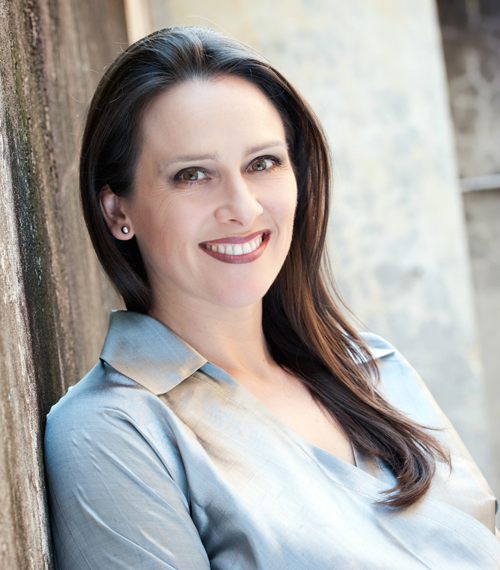
It's not many women who could set themselves the task of interviewing over 300 women who served Australia in WW2, but Jacqueline Dinan's passion and persistance has ensured this time period for women has been preserved forever in Between the Dances. Spending countless hours travelling across Australia to share these stories and connect with women from this generation, Jacqueline is back writing her next book, a novel based on the true story of 'Granny' McDonald, the first woman to train a Melbourne Cup winner.

Christine Durham, brain injury advocate
In 1992 the life of gifted teacher Christine Durham was turned upside down after she sustained a severe brain injury in a horrific car accident. Determind to return to teaching, after much perseverance and determination Christine was able to rebuild her life, becoming the inspirational leader she is today. Named 2014 Victorian Senior Australian of the Year, she continues to advocate for and empower people with brain injury.
Christine published Unlocking my Brain: Through the Labyrinth of Acquired Brain Injury in February 2014.

Angela Priestley, career motivator
The founding editor of Women's Agenda, the power-packed website for professionally-focused women, Angela spends her days empowering women by writing about careers, gender equality and leadership. She interviewed some of Australia's most successful women in her first book Women who Seize the Moment, and is a strong advocate for career opportunities for all women and men - no matter their life choices.
Connect with Angela on Twitter @angelapriestley
Benison O'Reilly, autism commentator
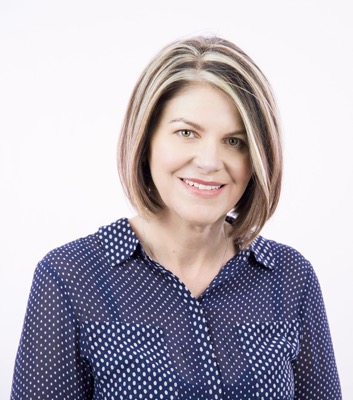
The go-to commentator on autism in Australia, Benison is a medical writer, pharmacist and autism mum who staunchly defends evidence-based therapy surrounding autism at every turn. Just read this intelligent takedown of a book providing misinformation to parents on The Guardian, impressed yet? Benison is the co-author of The Complete Autism Handbook and Beyond the Baby Blues, both books responsible for helping parents through some of their most tough and confusing times.
Connect with Benison on Twitter @BenisonAnne or her website.
Take a sneak peak at the Ventura Press 2016 List

Well 2015 was quite a year. It was the year we came of age.
On the business front, JCP was rebranded as Ventura Press as we celebrated our new distribution alliance with Simon & Schuster Australia. We published the fabulous Maria Katsonis, Honey Brown, Jacqueline Dinan and Harrison Young.
It was the year I became an AFR/Westpac 100 Women of Influence, was elected as a director of the Australian Publishers Association and joined the board of Copyright Agency. I am thrilled to able to represent our industry at this level.
Where to from here? Next year only gets better.
The 2016 list is an eclectic mix of everything we feel is important to life. Books that impart knowledge, fiction that transports, memoirs that will inspire and lived experiences that will motivate us all to achieve our very best.
We have ex-policeman Trent Southworth’s Wasted in March – a book about alcohol and drugs every parent of a modern teenager needs to read. Believe me. In May, Marina Go’s Breakthrough recounts the remarkable story of her Chinese Italian heritage and her rise from editor of Dolly to the very top of Australia’s media ranks. In April, Winsome Thomas release her poignant and inspiring guide to fulfilment, Heart Hungers. You may recognise Winsome as the psychologist who treated Kate Richards in her book Madness, a Memoir. On to the second half of the year, we cannot wait to show you Rebellious Daughters in August, an anthology where Australia’s most talented female writers share their stories of rebellion and defiance. Edited by Maria Katsonis and Lee Kofman, contributors include Jane Caro, Jamila Rizvi and Susan Wyndham.
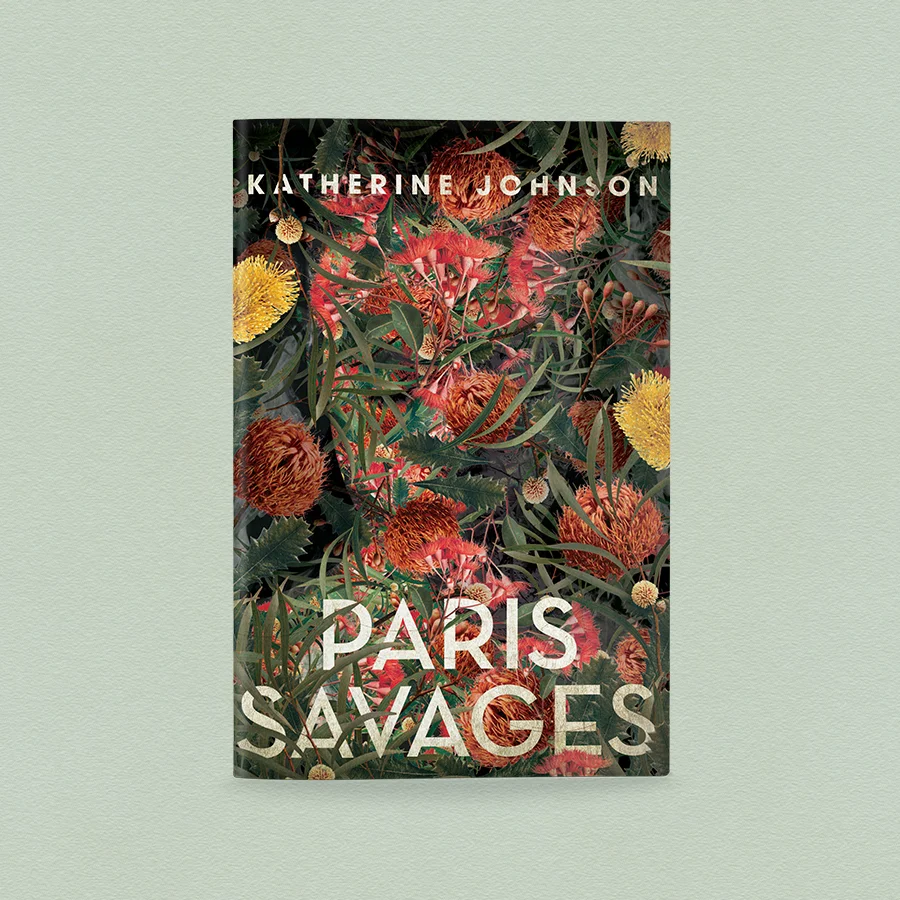
In fiction, we will publish the debut Australian novel Black British by Hebe de Souza, a sharply funny yet poignant coming of age story of life in post-colonial India. Next up is Katherine Johnson's story of family secrets, survival and second chances set in the gothic landscape of northern Tasmania’s caves in 1952. Wrapping up the year we have Director of The Ethics Centre, Simon Longstaff’s stunning children’s picture book Poppy and the Spider’s Song, to be released in October.
I am heading back ‘home’ to England for Christmas with my family. After all these years in Sydney, I only feel it is truly Christmas when it is freezing cold and dark at 3pm. No wonder I read so many books in my childhood.
Wishing you all a very happy Christmas and New Year. We are looking forward to next year more than ever before.
Jane Curry
The Women Who Influenced Me by Jane Curry
To celebrate being named a 100 Women of Influence by Westpac and Financial Review, and the solidarity of all women in business, Jane has written the below article to pay tribute to all the women who influenced her along the course of her career and gave her a leg up the ladder of success.
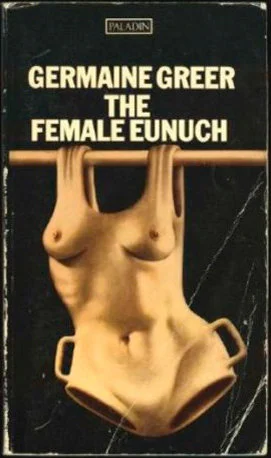
The place I call home is the picturesque cathedral city of Ripon in North Yorkshire. But thanks to a potent reading mix of Germaine Greer’s The Female Eunuch and my monthly delivery of Cosmopolitan which was full of glamorous women striding forth with their briefcases and high heels, I knew my life would only really start when I escaped and got myself to London.
And it did.
First stop was university at the red brick red flag-flying Manchester. We raged against Thatcher’s Britain, staged sit-downs, held vigils for Nelson Mandela and supported the striking miners. We were engaged and passionate for a better world. I also realised that embracing feminism was the only logical way to live, which meant the obligatory Virginia Woolf poster, a full collection of Carmen Callil’s Virago paperbacks and a subscription to Spare Rib.
So armed with an honours degree, a suitcase and an education in life, I set off to London and started my first job in publishing with Time-Life Books on Bond Street. My boss was the uber-stylish and inspirational Editor in Chief, Kit van Tulleken. Kit was Canadian, powerful, clever and awe inspiring to my 21 year old self. As a first boss I could not have asked for a better role model. Her two boys often came in after school so before the phrase ‘having it all’ was coined, she did indeed have it all.
Time-Life sent me on a placement to Sydney to work for dynamic American, Bonnie Boezeman, who headed up their Asia Pacific division. Bonnie was a whirlwind of energy and professionalism and ran the company with utmost flair and dedication.
It is only writing this now I realise that my first two bosses were such influential women. They inspired me from the start to love the numbers side as much as the creative. Power always resides where the money is made and so I have been fortunate to be mentored into financial literacy very early in my career.
Book publishing is a wonderful convergence of my love of the political and cultural together with my passion for business. So thank you Germaine, Carmen, Kit and Bonnie for all your influence on my formative years. And of course thank you to Cosmo for showing me the world beyond Ripon.
If you would like to congratulate Jane, share tales from your own rebellious university years or tell us about the people who influenced you, come and have a chat on Facebook and Twitter.

Photos from Writers in the Park Festival at Centennial Park, Sydney
Rainy morning weather couldn't stop our local writer's festival, Writers in the Park, from launching with a bang at Centennial Park in Sydney this past Sunday 27 September.
Ventura authors were there in force, including The Good Greek Girl's Maria Katsonis, Icing on the Cake's Annabel Morley and Talk with your Kid's Michael Parker. Our managing director Jane Curry even shared her book tips on a killer publishing panel.
You can read an in depth recap of the event from the wonderful Nicole Melanson, editor of WordMothers.
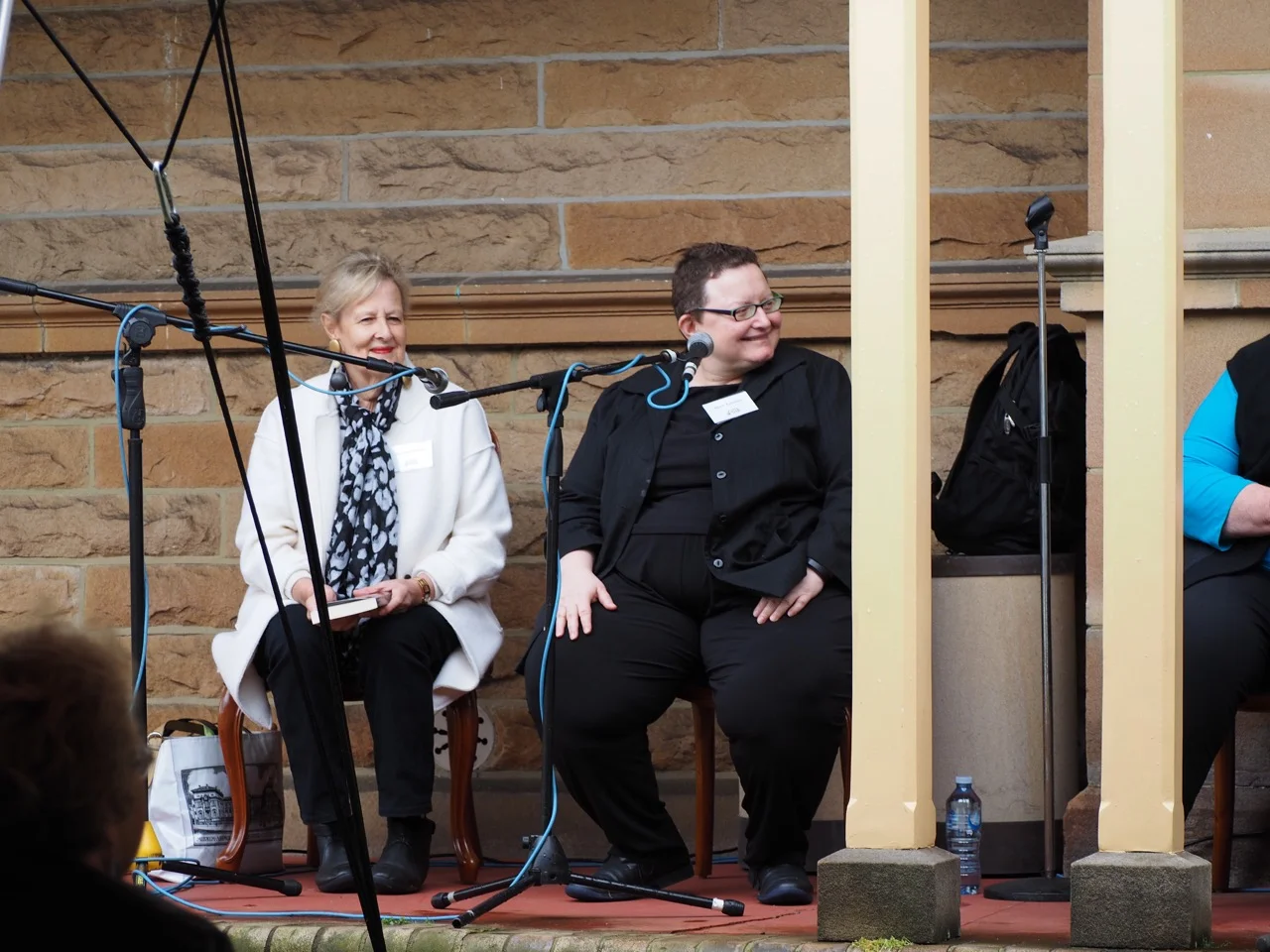
Annabel Morley and Maria Katsonis enjoying their memoir panel. Photo by John Grant.
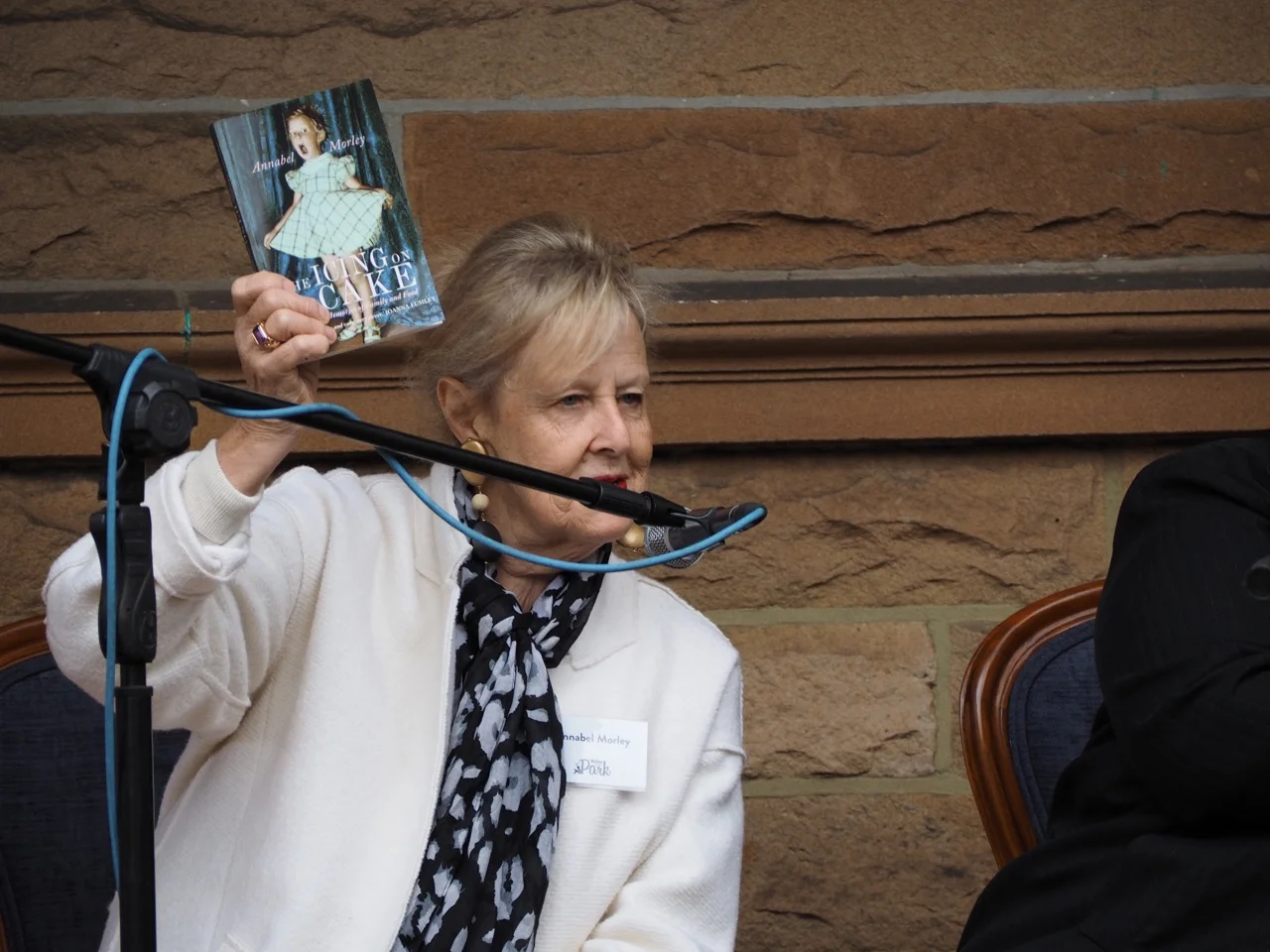
Annabel Morley, author of Icing on the Cake. Photo by John Grant.
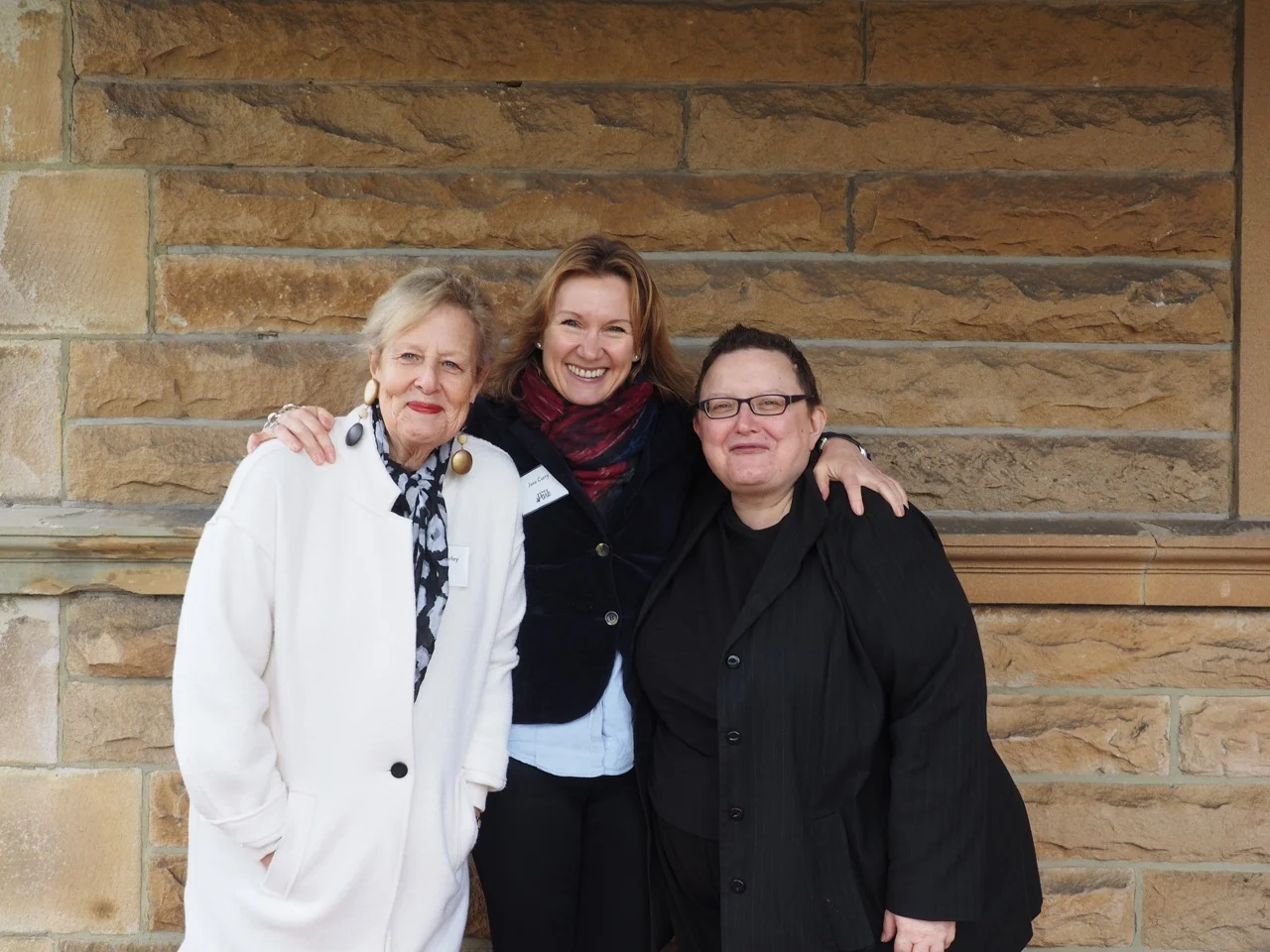
Publisher Jane Curry with Annabel Morley and Maria Katsonis. Photo by John Grant.
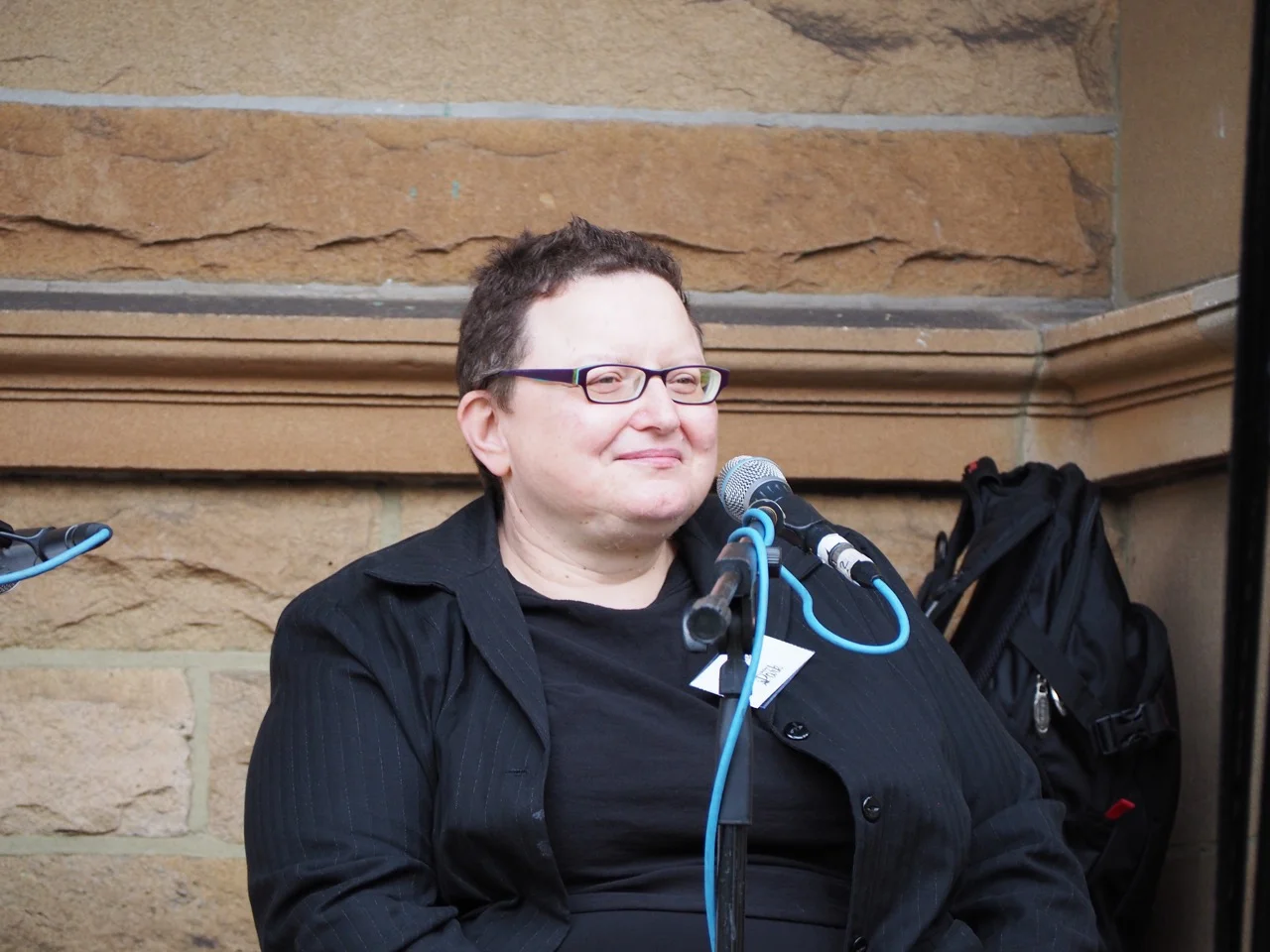
Maria Katsonis, author of The Good Greek Girl. Photo by John Grant.
Jane Curry named 100 Women of Influence by Westpac and Financial Review

Ventura Press founder and managing director Jane Curry has been named a Westpac and Financial Review 100 Women of Influence in the Business Enterprise category. Congratulations Jane! We couldn't be more thrilled and proud at Ventura HQ.
A big congratulations to all the winners. Read more about the 100 Women of Influence here.

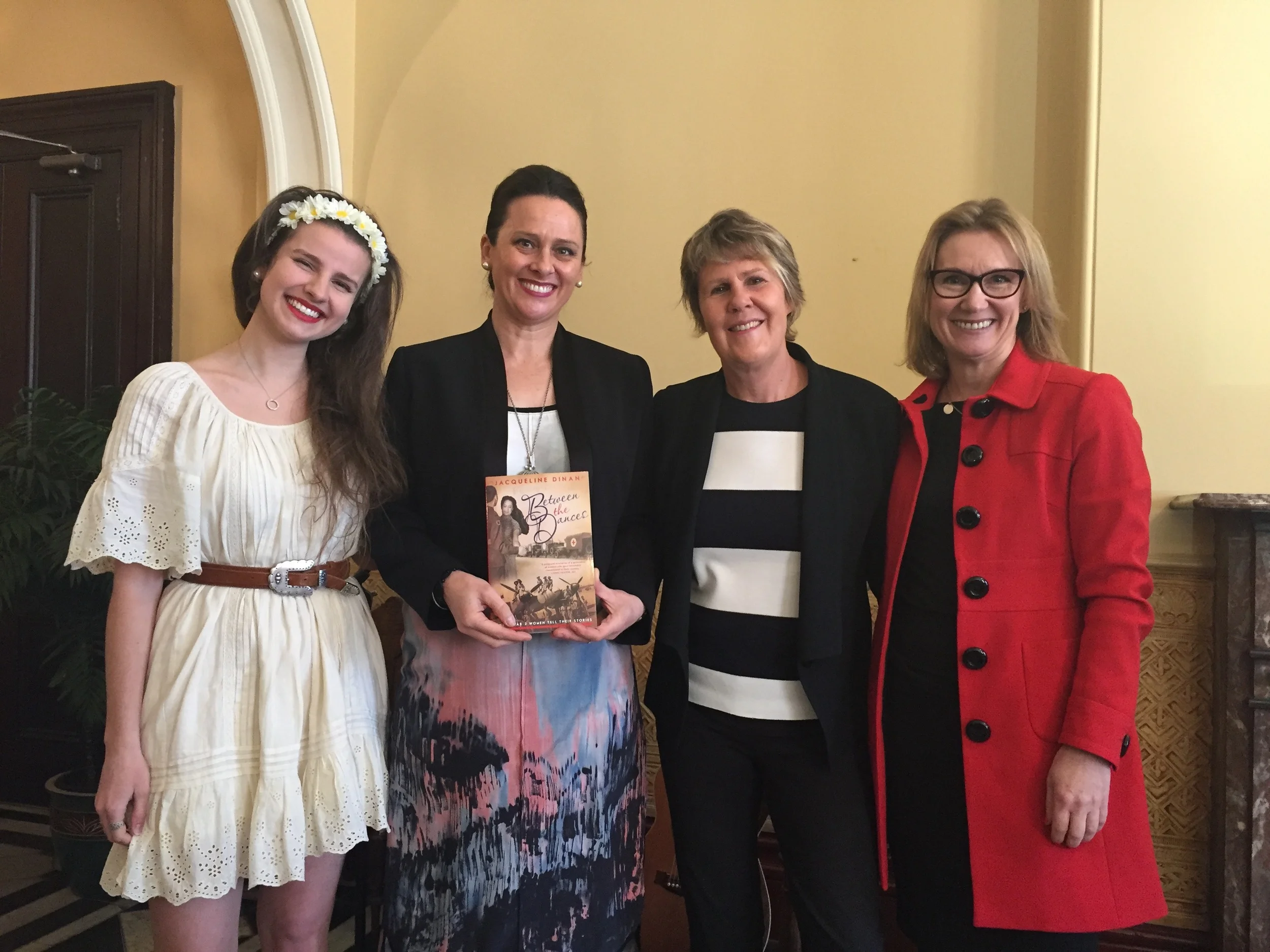
Between the Dances launches in Sydney with Fran Kelly and Imogen Clark
Between the Dances, a collection of stories from WW2 women, was launched to great success in Sydney on 14 August - a day before the 70th anniversary of VP Day.
RN Breakfast's Fran Kelly officially launched the book, while folk singer Imogen Clark rounded out the event by singing her beautifully poignant song about women in war, While Women Wait.
Author Jacqueline Dinan has been travelling across Australia since the launch of the book in March sharing the stories of these women - two of whom were in attendance to celebrate their contributions to the book.
Peggy Williams was working at a citrus farm in Leeton, Victoria when the war ended. She was interviewed by Fran for RN Breakfast to share her memories from that joyous day. Listen to the audio here.

Imogen Clark, Fran Kelly, Jacqueline Dinan and Publisher Jane Curry

Jacqueline Dinan, City of Sydney Deputy Lord Mayor Robyn Kemmis, Jane Curry
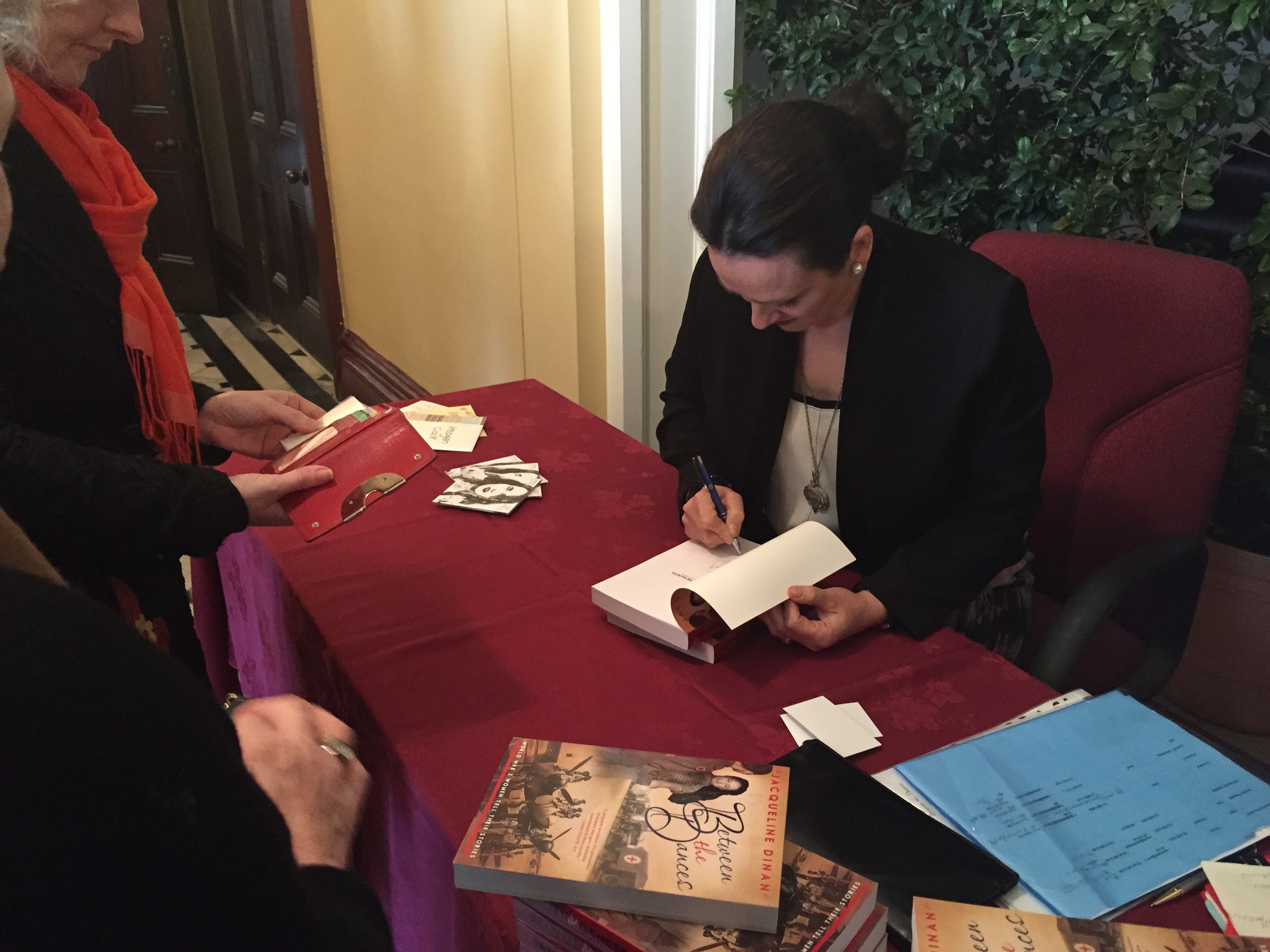
Jacqueline Dinan signs books at the Sydney launch of Between the Dances

Meg Green, State President of the War Widows Guild assisting one of her widows, Peggy Williams, while also meeting Edna Petfield and Fran Kelly
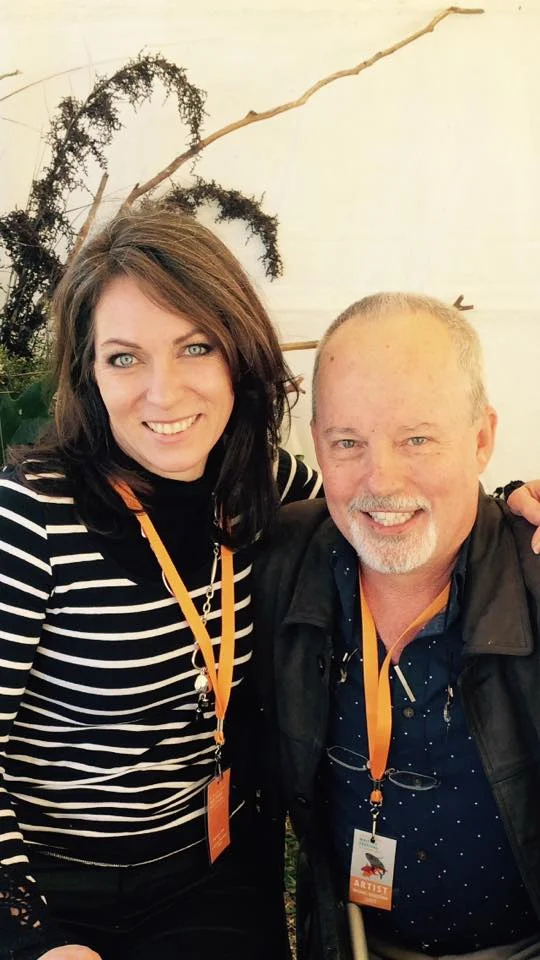
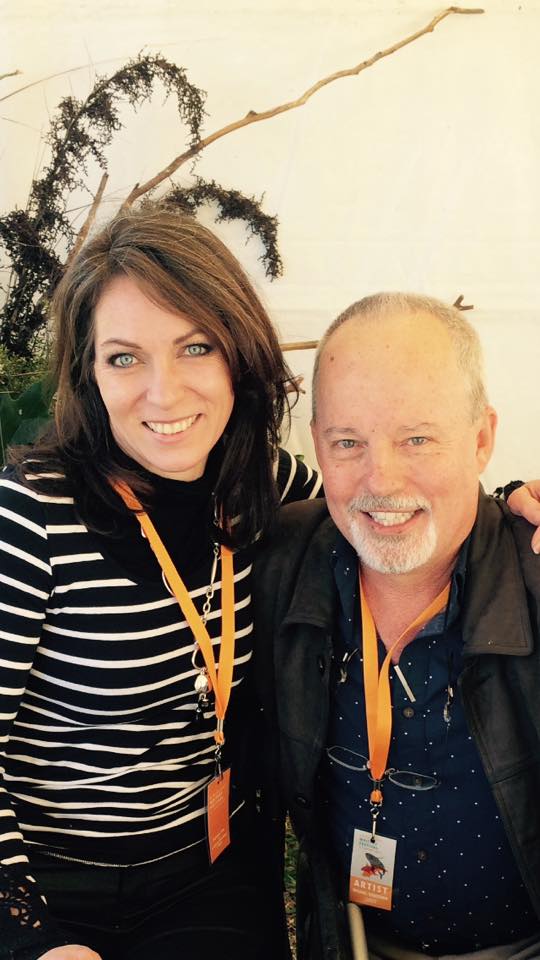
Honey Brown goes to Byron Bay Writers Festival
Beautiful Byron Bay with the host to the Byron Bay Writers Festival on 7 - 9 August and author of Six Degrees Honey Brown was thrilled to be speaking on two panels.
The Green Room was buzzing, and charismatic attendees and authors were in abundance, says Honey.
Her first time at the festival, Honey spoke at Romance: Escapism or Relationship Hotline with fellow authors Krissy Kneen and Jennifer St George, and Crime Scene with Mathew Condon and Michael Robotham.
Here's cheers to a wonderful festival, and to an even better 2016!


Ventura Press authors at the Melbourne Writers Festival
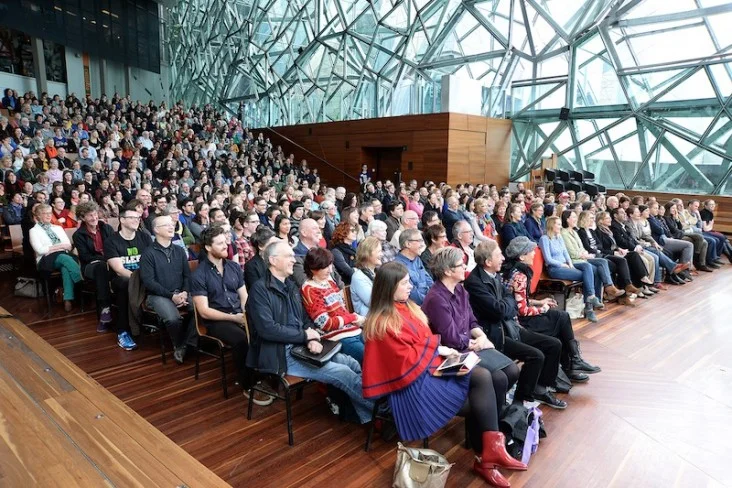
The Melbourne Writers Festival program was announced today! Find out which Ventura Press authors are going.
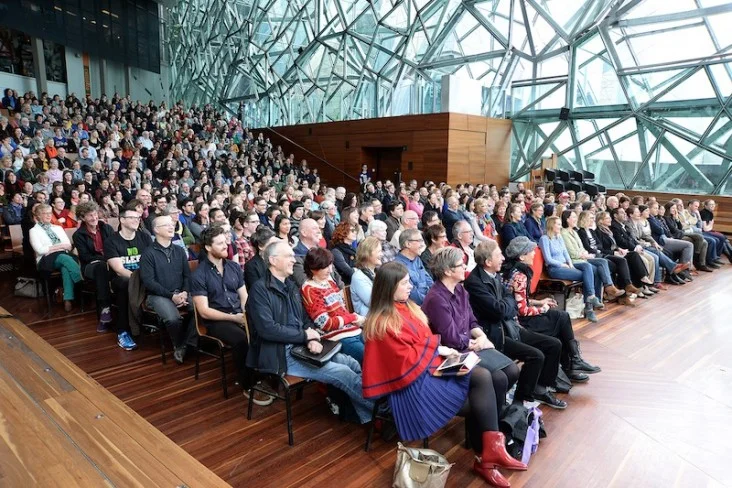
Today the program for the Melbourne Writers Festival was announced, and after a long and exciting wait we can finally reveal the excellent talks and panels our authors will be involved in.
Even our Managing Director Jane Curry will be involved this year, sharing her expertise on how to get published in the book industry. All you Melbournites (and lucky travelling Australians and Internationals) have something very special to look forward to!
Pop in and say hello to Ventura authors at the following events.
Honey Brown at After Gone Girl
Was Gone Girl a game-changer? Or did edgy psychological thrillers with complex female protagonists already exist? Honey Brown and Ann Turner talk about the book that influenced a genre and discuss their own thrilling novels. In conversation with Angela Savage.
10:00 AM
23/08/2015
ACMI Cinema 1
Jane Curry at Pathways to Publication
Ready to get published? Learn how to kick-start your writing career from leading industry experts including publishers (Black Inc, Giramondo, Tule Publishing, Ventura Press), editors (Australian Book Review, Canary Press, Mamamia, The Big Issue) and agents (Alex Adsett Publishing Services, Curtis Brown Australia, Jenny Darling & Associates).
10:00 AM – 1PM
23/08/2015
The Wheeler Centre, Performance Space
- Publishers: Chris Feik (Black Inc), Alice Grundy (Giramondo), Jane Curry (Ventura Press), Jane Porter (Tule Publishing)
- Editors: Amy Ballieu (ABR), Robert Skinner (Canary Press), Jamila Rizvi (Mamamia), Alan Attwood (The Big Issue)
- Agents: Alex Adsett, Clare Forster, Jenny Darling
- Chairperson: Lefa Singleton Norton
Honey Brown and Harrison Young at Classified: Lit vs Genre
Erotica, romance, women’s fiction, literature – what’s the difference between ‘genre’ and ‘literary’ fiction? Honey Brown, Krissy Kneen and Harrison Young – who all write about sex – talk about how their writing has been classified by publishers and booksellers, and received by readers. Hosted by MWF Director Lisa Dempster.
1:00 PM
23/08/2015
ACMI Cinema 1
Maria Katsonis at The Next Big Thing
The Next Big Thing is all about showcasing exciting new writers: the ones to watch. In this special MWF edition of the Wheeler Centre series, hear from Miles Allinson, Maria Katsonis, Eileen Ormsby and Laura Woollett – in the cosy surrounds of The Moat. Hosted by Helen Withycombe.
6:15 PM
24/08/2015
The Moat
Maria Katsonis at Good Muslim Boy, Good Greek Girl
What’s it like to be a first-generation migrant stuck between cultures – especially when who you’re supposed to be conflicts with who you really are? Maria Katsonis and Osamah Sami reflect on battling expectations and defying stereotypes. Hosted by Jan Molloy.
6:00 PM
27/08/2015
Immigration Museum
Maria Katsonis at Coffee & Papers at M.A.D.E.
Journalism is the first draft of history. Come and talk about today’s headlines with writers from the Ballarat Courier: history being made.
9:30 AM
29/08/2015
Museum of Australian Democracy at Eureka (M.A.D.E.)
Maria Katsonis at Workshop Writing Memoir
They say everyone’s got a story to tell… but how do you make it resonate? How do you know what to put in, what to leave out, and how to find the ‘truth’ and meaning of your life’s story? Memoirist Maria Katsonis has done it – she’ll show you how, and help you jump the hurdles to putting it in print.
11:00 AM
29/08/2015
Museum of Australian Democracy at Eureka (M.A.D.E.)
COVER REVEAL: Pocket Paleo by Catherine Proctor, released in September
The next book in our powerhouse pocket range is here with Pocket Paleo! To be released on 1 September 2015, Pocket Paleo is the easiest and most effective introduction to the paleo diet. Brought to you in a handy pocket-size at an incredible price point, the book outlines the philosophy of paleo with over 50 delicious recipes.


Ventura Press launches with Simon & Schuster
After 12 years of successful publishing, we are delighted to announce the launch of Ventura Press from 1 August 2015.
The launch of Ventura Press celebrates a new trade sales and distribution partnership with Simon & Schuster Australia, which will ensure the continued growth of our company across Australia and New Zealand.
The first title to be published under Ventura will be Six Degrees by award-winning author Honey Brown, one of Australia’s best contemporary fiction writers.
“This is a wonderful opportunity... to join forces with the trade strength of Simon & Schuster,” said Jane Curry, managing director of Ventura Press. “Ventura will continue to publish our signature brand of strong Australian non-fiction, health, and high-end fiction titles to complement the excellent Simon & Schuster list.”
Dan Ruffino, managing director of Simon & Schuster Australia, said he is thrilled to welcome Jane Curry, one of Australia’s most well respected independent publishers, to the company.
“The experience that Jane and her team bring coupled with her passion and innovative approach both complements and enhances the values we have here,” he said. “We are looking forward to growing the sales and presence of Jane’s books across Australia New Zealand from 1 August.”